 Image: Rembrandt, public domain
Why the Night Watch is smaller than Rembrandt painted it
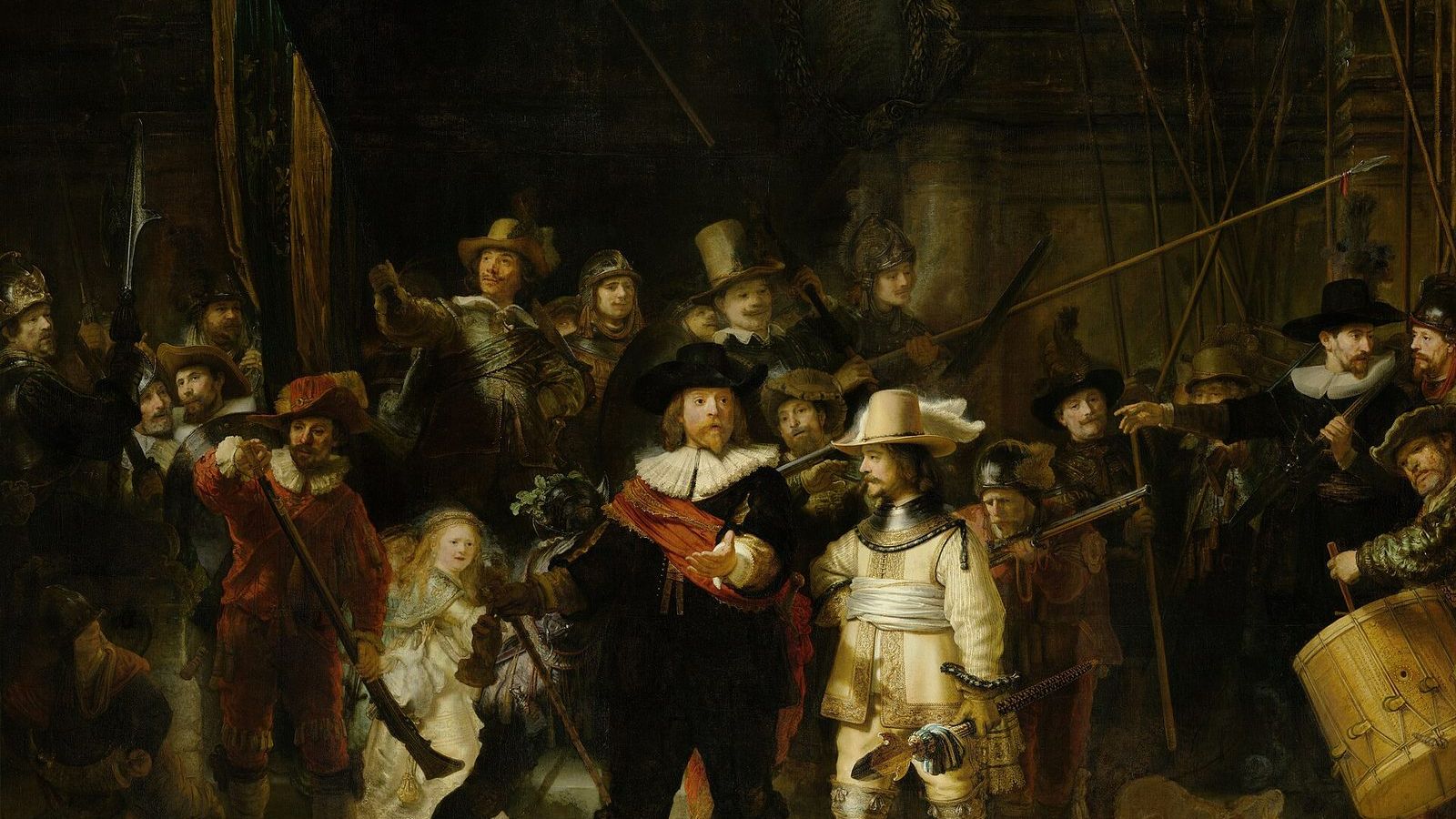
The painting that everyone calls the Night Watch is 363 cm high and 437 cm wide, which makes it the largest canvas Rembrandt ever painted and one of the largest in any Dutch museum. It was larger. When it left the hall of the civic guard for which it was made and went to the town hall of Amsterdam in 1715, it was trimmed on every side so that it would fit between two doors. By the Rijksmuseum's figures, about 64 cm went from the left, 22 cm from the top, 12 cm from the bottom, and 7 cm from the right. Nobody kept the strips. Nobody knows what became of them.
What the painting is
Its proper title is Militia Company of District II under the Command of Captain Frans Banninck Cocq, and it was finished in 1642 for the Kloveniersdoelen, the headquarters of one of Amsterdam's companies of civic guards. Eighteen guardsmen paid to be in it, and their names are on a shield that was added to the archway later. Rembrandt added about sixteen more figures of his own: a drummer, a boy with a powder horn, a dog, and a small girl in a pale yellow dress with a dead chicken hanging from her belt, who carries the company's emblem, the claw of a bird of prey. The captain in black steps forward with his hand out, and his lieutenant in yellow walks beside him. The scene is daylight. The name Night Watch arrived in the eighteenth century, when varnish and dirt had darkened the picture so far that people took it for a night scene.
The painting now hangs in the Rijksmuseum's Gallery of Honour under the inventory number SK-C-5. The C says that it is on loan: it belongs to the City of Amsterdam, which inherited it from the guard company.
How we know what was cut
The evidence is a copy. Gerrit Lundens, a minor Amsterdam painter, made a small copy of the whole composition some time between 1642 and 1655, before the cut. It is 66.5 cm by 85.5 cm, it belongs to the National Gallery in London, and it hangs on loan in the Rijksmuseum near the original. In the copy there are two more guardsmen on the far left, the archway at the top has room above it, and the figures in the foreground stand further from the lower edge. A drawing in the album of Frans Banninck Cocq himself, now in the Rijksmuseum, shows the same wider scene.
Put the two pictures side by side and the arithmetic is simple. The original was about 508 cm wide and 397 cm high. The painting today is 437 by 363. In area, that is about 20.2 square metres cut down to 15.9, a loss of a fifth of the canvas. The strip cut from the left was wider than a door.
What the cut did
The loss was not only of two men. Rembrandt had placed the captain and the lieutenant slightly left of the centre of the canvas, so that the company seemed to pour out of the gate towards the right and the viewer stood a little to one side of the action. Remove 64 cm from the left and the two officers move to the middle. The composition becomes more static and more symmetrical, which is how most people now remember it. The empty space above the arch, which gave the gateway its height, went too. In the trimmed picture the archway presses on the figures, and the whole scene is more crowded than the painter made it.
Unit 6 of the masterclass asks you to do this reading with a ruler: to mark the strips on a reproduction at scale and to see how the centre of the picture shifts. It is the clearest lesson in the program that a painting is an object with a history, and that the thing on the wall is what has survived rather than what was made.
Later damage
The cut of 1715 was the first injury and the largest. In 1975 a man attacked the painting with a bread knife and cut twelve slashes into it, one of them over a metre long; the restoration took months. In 1990 another man sprayed acid on it, which the guards neutralised with water before it got through the varnish. The painting has been cleaned and relined several times, and every intervention has been argued over, because every cleaning is a decision about what the painting should look like.
Operation Night Watch
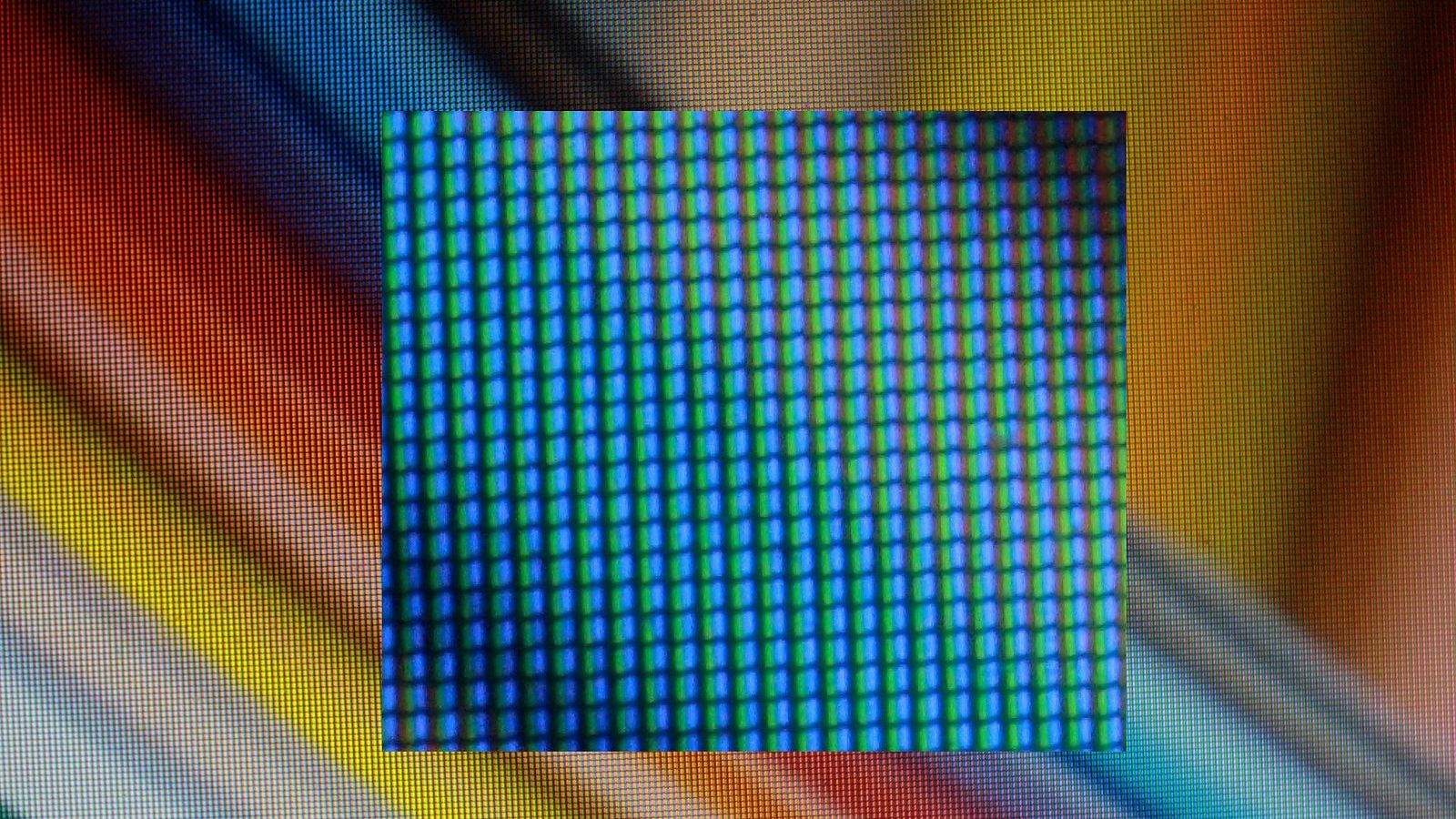
In July 2019 the Rijksmuseum began the largest examination of the painting ever made, in a glass room built in the gallery so that visitors could watch. Operation Night Watch used macro X-ray fluorescence scanning to map every chemical element in the paint, infrared and ultraviolet imaging, and high-resolution photography. The results included a sketch beneath the paint that shows how Rembrandt laid out the composition, traces of arsenic in the lieutenant's yellow costume from a pigment few expected, and, in January 2022, a photograph of the whole surface at 717 gigapixels. It was assembled from 8,430 separate photographs, and each pixel covers five micrometres of paint, so that on a screen you can zoom from the whole picture to a single crack.
In 2021 the museum did something nobody had tried. Robert Erdmann, a scientist at the museum and the University of Amsterdam, trained a computer model on the Lundens copy and the original, taught it to translate the copy's style into Rembrandt's, and printed the four missing strips on canvas. From June 2021 they hung in their places around the painting for three months. Two more guardsmen stood on the left, the arch had its space, and the officers walked off centre again. The museum was clear that the prints were a reconstruction and not a restoration, and it took them down when the three months were up. The painting is still 363 by 437 cm.
Why it matters beyond this painting
Every old painting has been through hands that were not the painter's. Panels were sawn to fit frames, altarpieces were split and sold in pieces, canvases were enlarged by one owner and reduced by the next. The Night Watch is the famous case because the evidence is unusually complete: a dated event, a copy made before it, and a museum willing to show the loss. When you stand in front of any painting in a museum, one of the four questions of the program, how do we know, includes the question of what has happened to the object since it left the studio. The answer is usually in the museum's catalogue entry, and the Rijksmuseum's entry for SK-C-5 is a model of how such an entry should read.
Unit 6 of the Art History Masterclass reads the Night Watch with the strips of 1715 drawn to scale and introduces Operation Night Watch; Unit 11 returns to the painting for what its cleanings and attacks say about the museum as the last word on what a work looks like. The curriculum has both.