 Image: Politelyinsulting (CC BY-SA 3.0)
What the buyer of a USD 69 million NFT bought
A painting is scarce because there is one of it. Unit 11 of the masterclass shows that the market in art has run on that fact since the Renaissance, and a file has none of it, because every copy of a JPEG is the JPEG. The answer the market found in 2021 was to sell a record of ownership that is itself scarce. The sale that made the answer famous closed at Christie's on 11 March 2021, and its lot page is still online, so this post reads it as Unit 16 reads it, line by line, as a document.
The artist and the picture
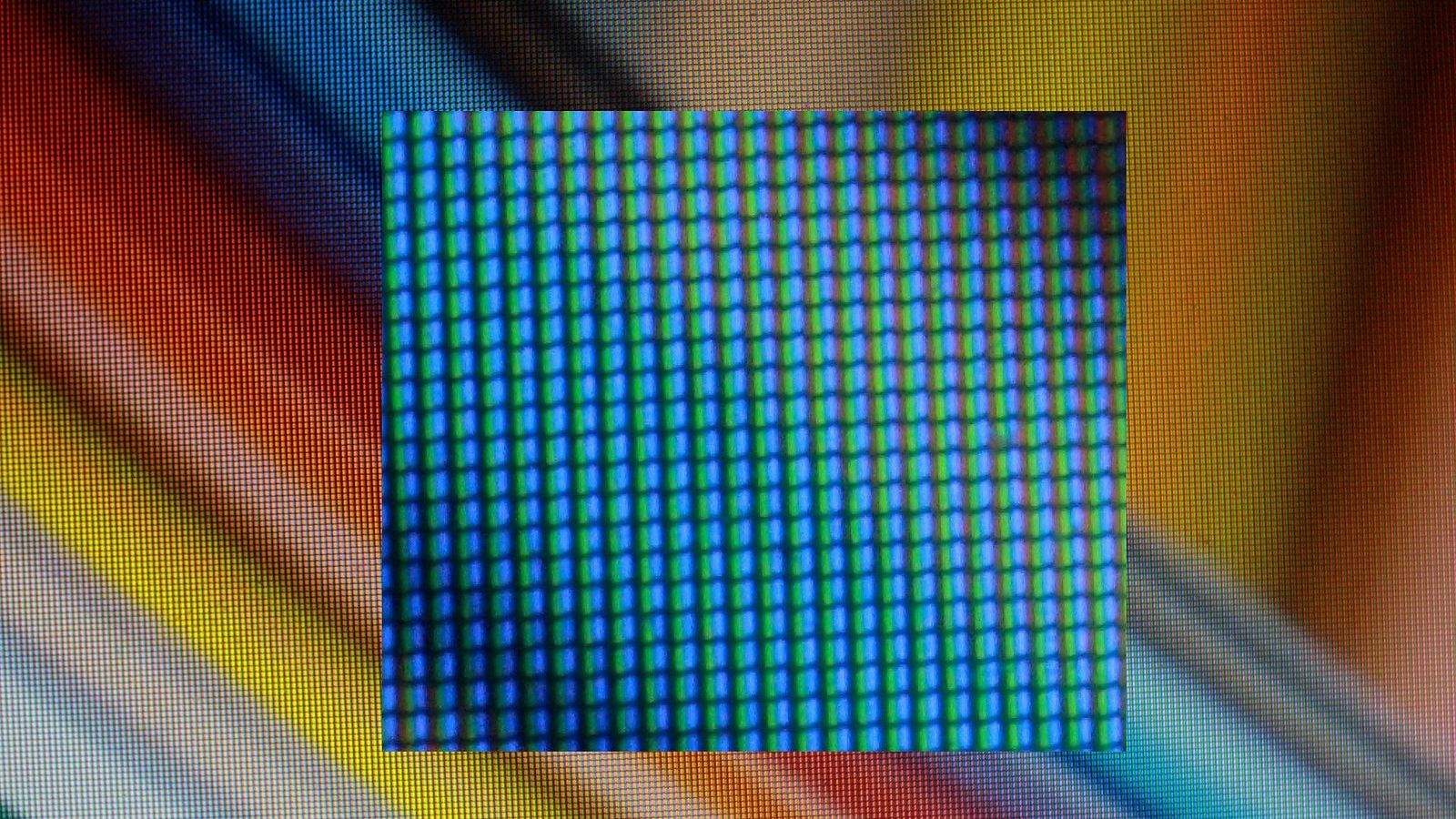
Mike Winkelmann, born in 1981, is a graphic designer from Wisconsin who works under the name Beeple and has posted one picture a day since 1 May 2007. The lot, Everydays: The First 5000 Days, is a single picture assembled from the first five thousand of those daily pictures in a grid. On a screen it reads as a dense field in which no square can be made out until you zoom in, and at any zoom a few of the squares come into focus as the renderings and political cartoons of particular days. The catalogue entry gives, in the place where a painting's medium and dimensions would stand, a different set of facts: non-fungible token (jpg), 21,069 by 21,069 pixels, 319,168,313 bytes, minted on 16 February 2021, with a token ID, 40913, a wallet address, and the address of the smart contract, which belongs to the platform MakersPlace.
What a token is
A blockchain is a ledger copied across thousands of computers in such a way that an entry, once made, cannot be altered without the others noticing. A non-fungible token is an entry in that ledger made by a program on the chain, called a smart contract, and it consists of the contract's address, a serial number, the address of the account that currently owns it, which is called a wallet, and a short block of metadata that usually includes a link to a file stored somewhere else. Fungible means exchangeable one for another, as coins are. A non-fungible token has a serial number and is therefore unique, and that uniqueness, and not the file's, is what is bought and sold. The standard that most art tokens follow, ERC-721, was published for the Ethereum chain in 2018, and its text is public and short enough to read in an evening.
The sale
Christie's opened the online sale on 25 February 2021 with a bid of 100 US dollars and closed it on 11 March after 353 bids. With the buyer's premium the price came to USD 69,346,250, paid, for the first time at Christie's, in the cryptocurrency Ether, 42,329.453 of it. By the auction house's count it was the third-highest price paid at auction for a work by a living artist, after Jeff Koons and David Hockney. The buyer, who bid as Metakovan, is Vignesh Sundaresan, a programmer and investor based in Singapore, and the token numbered 40913 was transferred on the chain to an address he controls, where anyone can see it.
What he received
The file did not change hands. The 319-megabyte JPEG is stored outside the chain, the token's metadata points to it, and anyone can download it, as anyone could before the sale. The copyright stayed with the artist, as it does when a painting is sold, so the buyer may show the file and say that he owns the token, and he cannot license the picture to others without Winkelmann's agreement. Scarcity did not arrive either, because the picture was not scarce before the sale and is not scarce after it. What was bought for USD 69.3 million was a line in a ledger naming its holder as owner of token 40913, which points to a file that everyone shares, together with whatever the market believes that line to be worth. The unit's Key Idea puts it in one sentence. A token records that a serial number issued by a contract belongs to an address, with metadata that usually links to a file kept elsewhere, and it does not contain the file, does not make it scarce, and does not transfer copyright unless a separate agreement says so.
What happened next
The market that formed around the token rose and fell faster than any market in Unit 11. By the figures of the tracking firm DappRadar, trading in tokens of all kinds, art and otherwise, came to about 95 million US dollars in the whole of 2020, peaked at about 12.5 billion in the first quarter of 2022, which is more than a hundred times the whole of 2020 in a single quarter, and had fallen to 1.9 billion in the last quarter of that year, after the collapse of several cryptocurrencies took most buyers with it. The counts should be read with care. Trackers differ, since CryptoSlam counted 18.3 billion for 2021 where DappRadar counted 24.9 billion; a token can be sold by its owner to the owner's own second address; and most of the volume was in collections of near-identical cartoon pictures. What remains for art history is smaller. A few artists who had made pictures on screens for years found buyers, and in February 2023 the Centre Pompidou in Paris announced the acquisition of a first group of works that exist as tokens, so the question of how a museum keeps such a thing, which Unit 16 asks of videotape and of net art, has a new case.
Why the sale belongs in an art history program
The price was a record for a form, and the unit treats it as an event in the history of the art market, on a line that runs through the dealers of the nineteenth century, the Scull sale of 1973, and the USD 450,312,500 paid for the Salvator Mundi at Christie's on 15 November 2017. The film-maker and writer Hito Steyerl had argued in 2009, in an essay called In Defense of the Poor Image, that a copy of low resolution which circulates should be judged by how it moves and whom it reaches as well as by how it looks. The Everydays file is the opposite case, a very large image whose value was attached to a record of who holds it, and the two together mark the ends of the range within which pictures now exist. Whether the picture itself is good is a separate question, and the tools of Unit 1, description before interpretation, still decide it. What a reader can take from the lot page is a habit. When a work is sold, ask what exactly changed hands.
Unit 16 of the Art History Masterclass, Art in the Age of Screens, reads the lot page as a document, plots the token market by quarter, and follows the question of ownership from Nam June Paik's television sets to the generated pictures of 2022 and the copyright decisions of 2025 and 2026. The curriculum describes it.