 Image: Cheng-en Cheng from Taichung City, Taiwan (CC BY-SA 2.0)
How to look at a painting for an hour
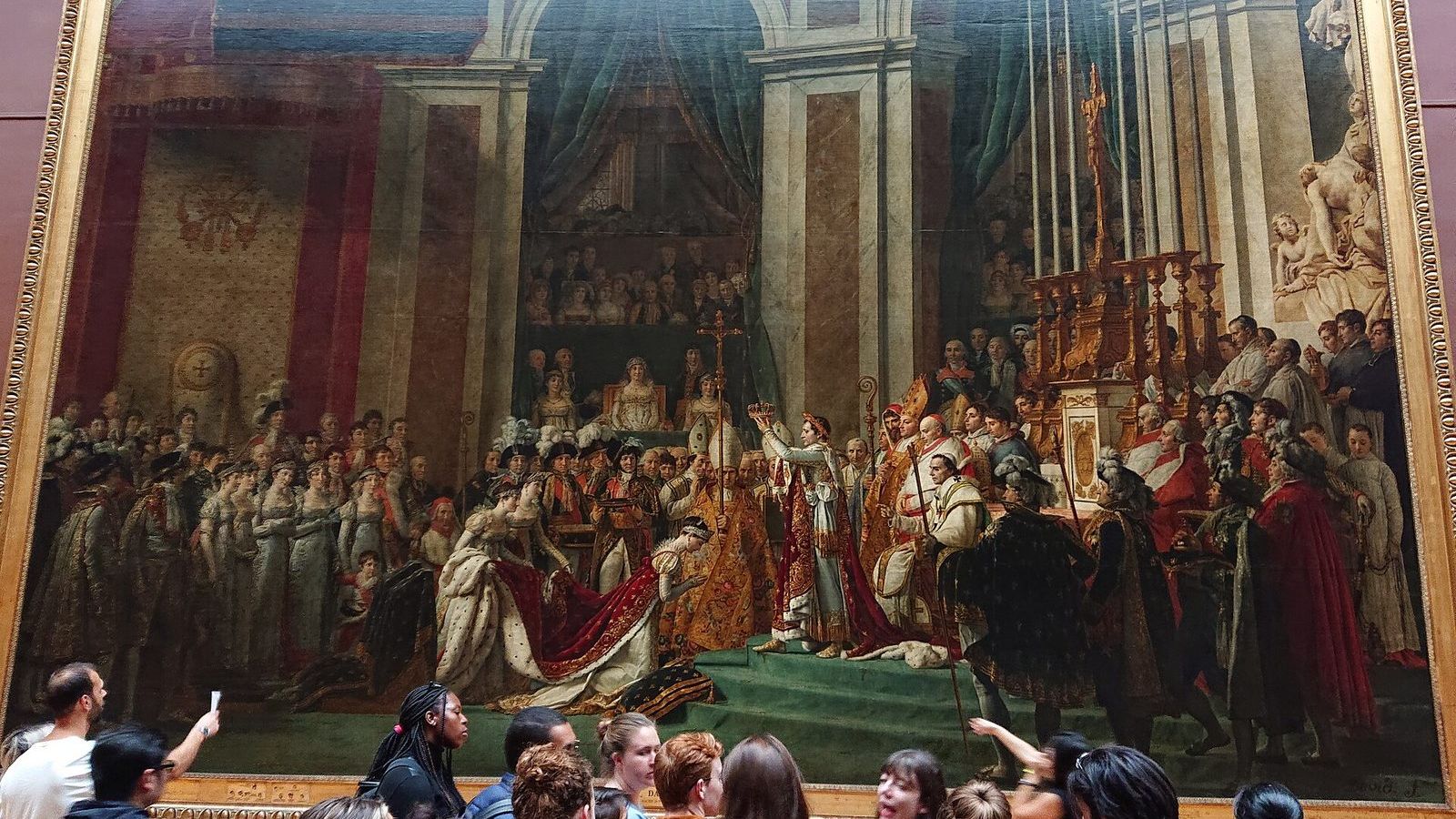
Two psychologists, Jeffrey Smith and Lisa Smith, once stood in the galleries of the Metropolitan Museum of Art in New York with stopwatches and timed visitors in front of six paintings. The mean was 27.2 seconds and the median 17. They published the figures in 2001, and in 2017, with Pablo Tinio, they repeated the study at the Art Institute of Chicago: a mean of 28.63 seconds, a median of 21. Some of the time was spent reading the label, and some of it taking a photograph. Half a minute, give or take, is what a painting gets. It is enough to recognize the subject and decide whether you like it. It is not enough to see it.
Three hours in front of a boy and a squirrel
Jennifer Roberts, a professor of art history at Harvard University, sets her students a different timetable. Every student picks one work of art and spends three hours in front of it before reading anything about it, writing down what they notice as they notice it. Roberts described the assignment, and her own three hours, in an essay called The Power of Patience in Harvard Magazine in 2013, adapted from a lecture she had given that spring. Her painting was John Singleton Copley's A Boy with a Flying Squirrel of 1765, in the Museum of Fine Arts, Boston: a boy in profile at a table, a pet squirrel on a gold chain, a glass of water, a red curtain.
She reports the times. It took her nine minutes to notice that the shape of the boy's ear repeats the shape of the ruff of fur on the squirrel's belly, and that the curtain's folds repeat them again. It took twenty-one minutes to see that the fingers holding the chain span exactly the diameter of the glass of water beneath them, so that the painter had measured one against the other. After forty-five minutes she began to see that the picture was about distance and transmission, about things sent across water, which the painting itself had been: Copley shipped it from Boston to London to be judged by painters he had never met. None of this was hidden. All of it was invisible at thirty seconds.
Her point is not that art historians are patient people. It is that patience has to be taught, against the grain of a world that delivers everything at once, and that the first thing it teaches is how much of what we see we have not looked at.
Why the eye stops early
Looking stops when recognition is done. A visitor sees a woman, a window, a letter, reads the label, confirms that it is a Vermeer, and the task the brain set itself is complete. To keep looking you need a different task, and the trick of the three-hour assignment is that it supplies one: write down what you notice. Writing slows the eye to the speed of the hand. It also exposes the gap between seeing and describing. Most people, asked to describe a painting they have looked at for a minute, can say what it shows and not what it looks like, and the difference is where art history begins.
A method for an hour
An hour is a long time in a museum and a short time in a studio. Here is how to spend one, using the four questions that the first unit of the masterclass teaches and every later unit applies.
What do I see. Begin with the object. How big is it, in centimetres or in relation to your body? Is it on canvas, panel, paper, or plaster? Is it oil, tempera, watercolour, ink? Then the arrangement: where is the horizon, where are the largest shapes, which lines run with the edges and which cut across them, where is the light coming from and what does it leave in shadow. Then colour: which hues, how light or dark, how saturated, and which ones are placed next to each other. Then space: what is near, what is far, and by what means is the difference made. Spend twenty minutes here and say nothing about meaning.
What does it show. Now the subject. Who are these people and what are they doing? What objects are present and which of them is an attribute, the thing that identifies a saint or a god, and which might be a symbol, and what is your evidence? The label will tell you the subject in three words. Your job is to check it against the picture and to notice what the label leaves out.
How was it made. Look for the process. Can you see brushstrokes, and are they long or short, thick or thin? Is there a drawing visible under thin paint? Are there places where the painter changed something, a hand or a head that shows through? Has the surface cracked, darkened, or been retouched? Museum labels and catalogue entries increasingly report what X-rays and infrared cameras have found, and a good one tells you about layers you cannot see.
How do we know. Finally the evidence. Is there a signature, a date, an inscription? What does the museum say about the date, and does it say about or circa? Where has the painting been since it was made? The entry in the museum's online collection will usually give the provenance in a list, and reading it is the beginning of the history of the object.
What an hour finds
Three things happen reliably. You find details nobody mentions, because every painting has more in it than any label. You find the painter's decisions, the places where a line was moved or a colour chosen against the obvious one, because decisions show at the speed of writing. And you find that your first reading was partly wrong, that the woman is not reading the letter but holding it, that the window is open, that the dog is looking at you. The three-hour assignment is unusual only in its length. An hour with a notebook does most of its work, and even ten minutes will put you outside the median.
What museums have to do with it
The half-minute figure is not only the visitor's fault. Museums hang a hundred paintings in a room, light them evenly, and post a label beside each with the subject and the date, which is an invitation to recognize and move on. The masterclass returns to this in Unit 11, where the museum is studied as an institution that shapes looking, from the nineteenth-century gallery hung floor to ceiling to the white cube with one picture per wall. A visitor who knows the numbers can resist them. Pick one painting per visit, sit if there is a bench, and let the rest of the room wait.
Unit 1 of the Art History Masterclass opens with the viewing-time studies, presents Jennifer Roberts's essay as its research spotlight, and introduces the four questions on Van Eyck's Arnolfini Portrait, which has a separate article on its mirror. The curriculum lists the rest.