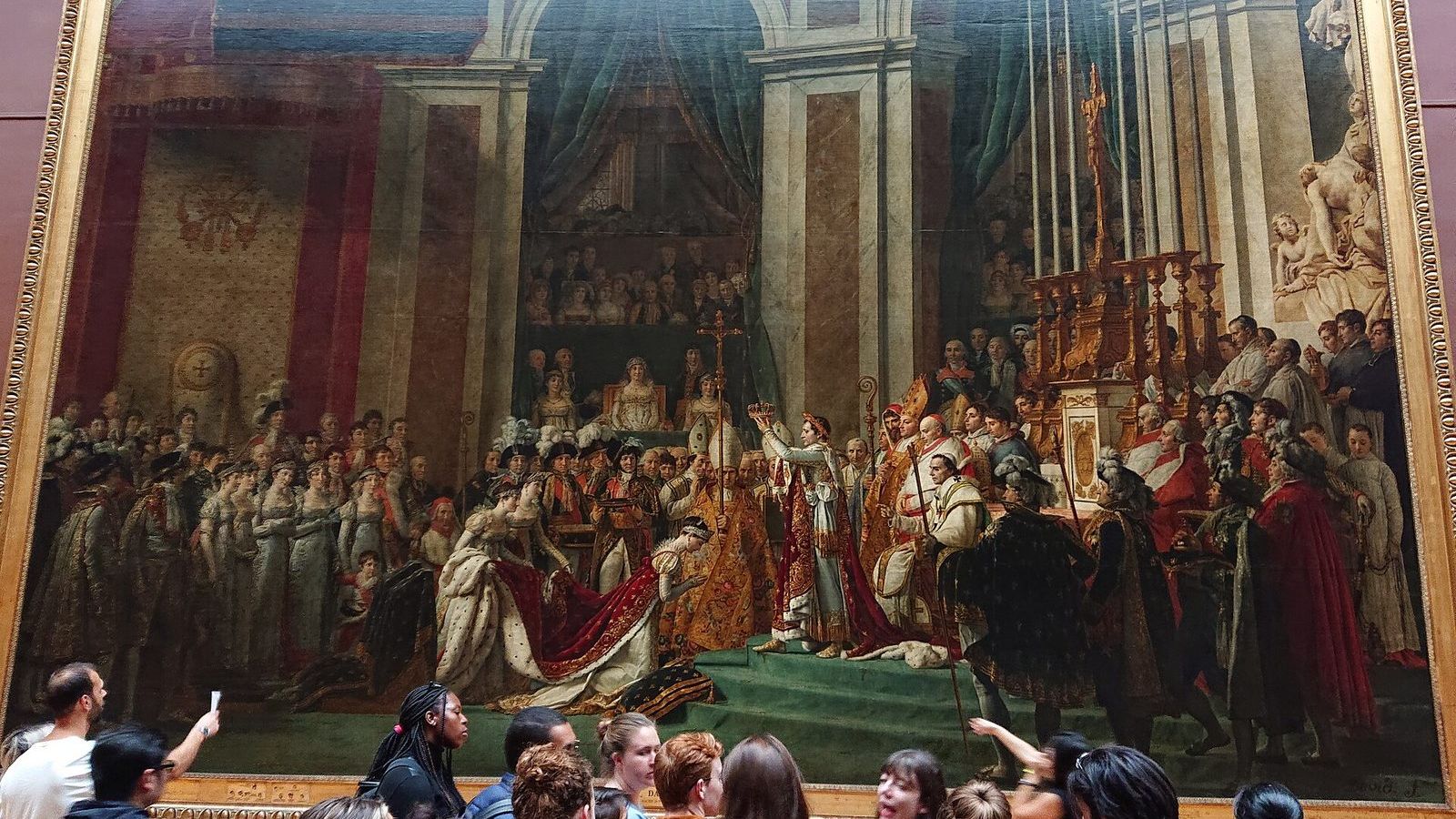
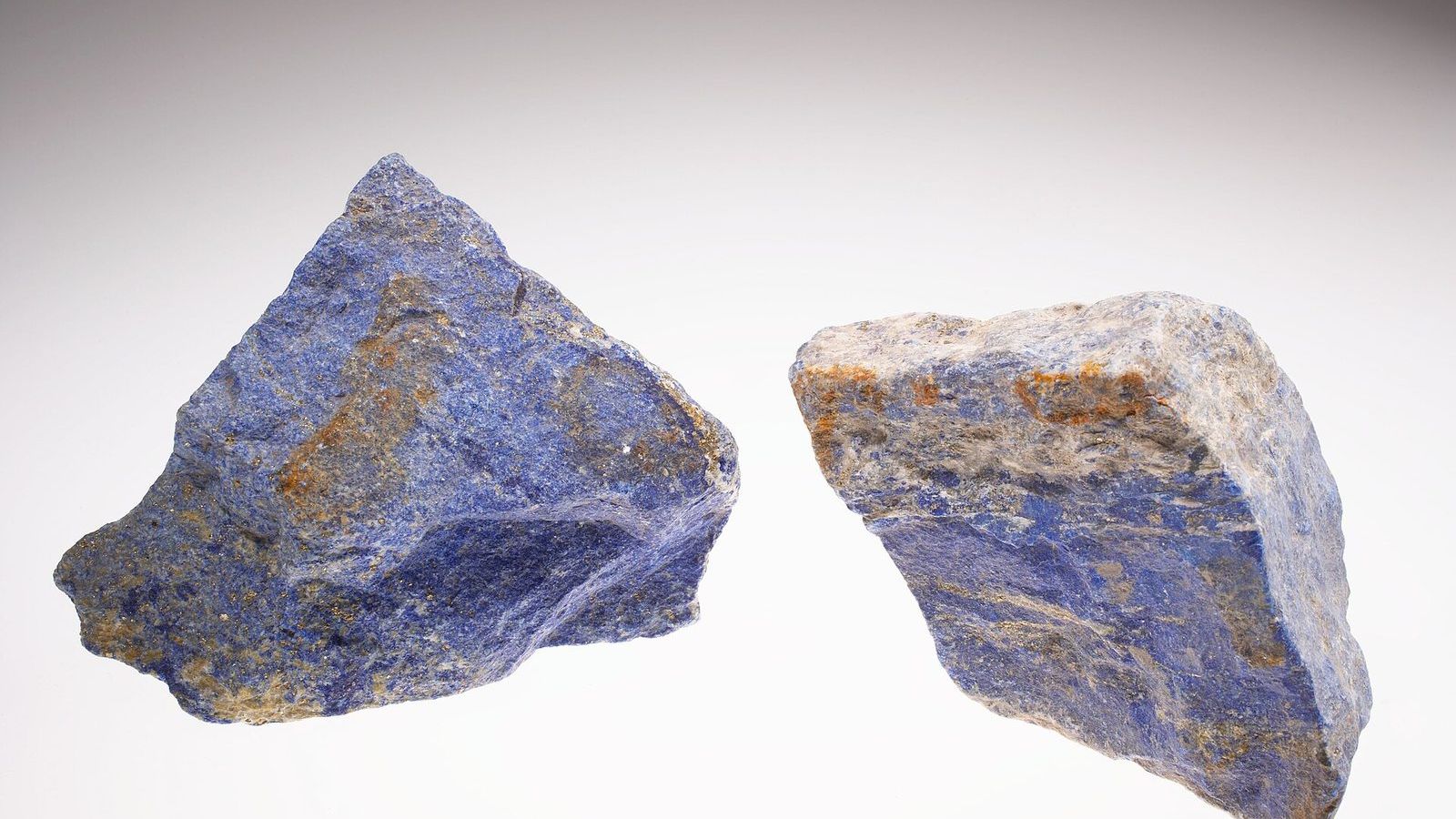
 Image: The Central Intelligence Agency, public domain
What a Renaissance contract says about the price of blue
The Spedale degli Innocenti in Florence was a foundling hospital, built by Brunelleschi from 1419, and its church needed an altarpiece. On 28 October 1485 its prior, Fra Bernardo di Francesco, signed a contract with the painter Domenico Ghirlandaio for an Adoration of the Magi. The painting was finished in 1488 and is still in the building. The contract survives too, and the art historian Michael Baxandall put it at the opening of his book Painting and Experience in Fifteenth Century Italy in 1972, because in a page it says more about how a painting was made and paid for than most treatises.
What the contract says
In Baxandall's translation the prior supplies the panel, already made and ready. The painter must paint the panel at his own expense with good colours and with powdered gold on such ornaments as demand it, and any other expense is his. The blue must be ultramarine of the value about four florins the ounce. He must have delivered the work within thirty months. The price is 115 large florins, and if it seems to the prior that the finished work is not worth that sum, he may have it valued and pay less.
There are two more clauses that Baxandall draws attention to. The painter must paint the panel with his own hand, in the manner shown in a drawing that both parties have seen, and the figures must be of the quality of the drawing. The patron, in other words, was buying Ghirlandaio's skill, not his workshop's, and he had a sketch to hold him to. And the gold and the blue, the two materials with a price of their own, are named, graded, and costed. Everything else is left to the painter.
Why the blue needed a clause
Ultramarine was the most expensive pigment a painter could use. It was made from lapis lazuli, a stone that came from one place, the mines of Sar-e-Sang in Badakhshan, in what is now the north-east of Afghanistan, and travelled by caravan and ship to Venice. Grinding the stone gives a grey powder, because lapis is mostly colourless minerals with blue lazurite scattered through it. The medieval method, described by Cennino Cennini about 1400, was to knead the ground stone into a dough of wax, resin, and oil and then work the dough in lye; the blue particles came out into the liquid first and the grey stayed behind. The first extraction gave the finest blue, the later ones paler grades, and each grade had a price. Four florins the ounce was a high grade. Contracts of the period specify cheaper ultramarine, at two florins or one, for less important parts of a picture, and some allow azurite, a copper mineral called German blue that looks similar when fresh and turns greenish with age.
The Virgin's mantle in a fifteenth-century altarpiece is ultramarine because the patron paid for it to be, and everyone who looked at the picture knew what it cost. A blue mantle was the patron's generosity on the wall. The clause in the contract was a guarantee that he would get what he paid for and not azurite in its place.
What the numbers mean
Prices from another century mean nothing until they are compared. A florin was a gold coin of about 3.5 grams. By the figures that Richard Goldthwaite compiled from the building accounts of Florence, a skilled builder in the 1480s earned something in the region of thirty florins a year, so that 115 florins was about four years of a mason's wages for the painter's fee and materials together. An ounce of the best ultramarine, at four florins, was more than a month of that mason's work, and a large mantle might take several ounces. Gold leaf was costed in the same way, by the hundred leaves.
These proportions explain the shape of the contract. In the early fifteenth century, contracts spent their words on materials, because materials were where the money went, and a painting's value lay to a large degree in the gold and the blue on it. By 1485 the balance had shifted. The clause that binds Ghirlandaio to paint with his own hand and to the standard of a drawing is the clause about skill, and over the following century it was skill that patrons paid for and materials that became a detail. Baxandall's book traces that shift and calls what came with it the period eye: the habits of looking that a Florentine merchant brought to a picture, trained by gauging barrels and valuing cloth, and that a painter could rely on.
Reading the document as evidence
Unit 4 of the masterclass reads the contract clause by clause for what it says about the workshop, the patron, and the picture, and Unit 11 reads it again for the system of value it belongs to, in which the commission came before the market and the museum. The habit the document teaches is the fourth of the program's four questions: how do we know. For most fifteenth-century paintings we know the painter, the date, and the price from documents like this one, in archives in Florence, Siena, and Venice, and not from the picture. When a label says that a painting is by Ghirlandaio and dates from 1488, the label is a summary of paper.
Documents of this kind are now searchable. The Getty Provenance Index holds transcriptions of inventories and sale records from the sixteenth century onwards, and the archives of Florence have put their own contracts and account books online in stages. A contract is a dry thing until you have one picture in mind, and then every clause is a decision that someone made about it.
What the blue looks like now
Ultramarine from lapis is stable. Five centuries later the Virgin's mantle in Ghirlandaio's altarpiece is still the blue the prior paid for, while the azurite in cheaper pictures of the same decade has turned to green and the red lakes have faded to pink. A synthetic ultramarine, chemically the same mineral made in a furnace from clay, soda, and sulphur, was discovered in France in 1826 and sold for a fraction of the price, and it is what every painter has used since. Lapis is still ground for restorers and for a few painters who want the stone itself, and it still comes mostly from the same valley in Badakhshan.
The Art History Masterclass reads the contract of 1485 in Unit 4, with a table of the pigments of the period and their cost, and returns to it in Unit 11 among patrons and collectors. A companion article explains how the perspective of the same century was constructed. The curriculum lists both units.