 Image: Daderot, public domain
What a museum owns and who is asking for it back
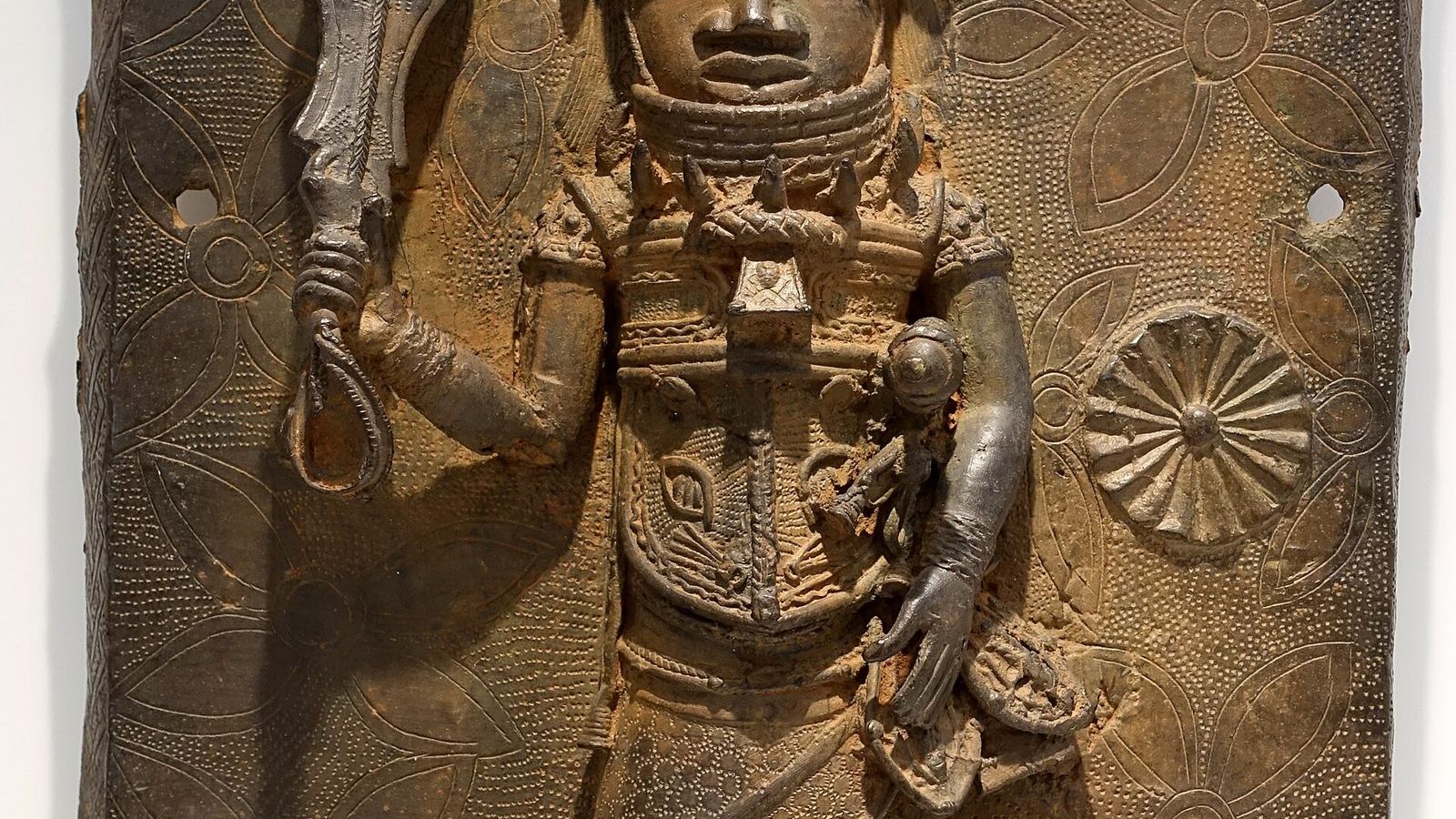
The brass plaques of Benin are among the finest castings ever made. They were produced from the sixteenth century in the kingdom of Benin, in what is now southern Nigeria, by guilds of casters working for the Oba, the king, and they decorated the pillars of his palace in Benin City with scenes of court life, warriors, and ritual. Together with carved ivories, commemorative heads, and figures, they are known as the Benin bronzes. In February 1897 they were in the palace. By the end of the year they were in London, Berlin, and the sale rooms, and the question of where they belong has been asked ever since.
The expedition of 1897
In January 1897 a British party led by the acting consul-general James Phillips set out for Benin City against the Oba's request that it wait, and was ambushed; most of the party were killed. In February a force of about 1,200 men under Admiral Harry Rawson took the city, burned much of it, and sent the Oba into exile. The soldiers removed the contents of the palace, several thousand objects, as the spoils of war. Some were sold to cover the cost of the expedition, some were given to officers, and the Foreign Office sold others. The British Museum holds about 900 pieces, the Ethnological Museum in Berlin about 500, and the rest went to museums and private collections across Europe and North America and, through later sales, back to Nigeria in small numbers.
Nobody knew the full extent until recently. The project Digital Benin, launched in 2022 by the Museum am Rothenbaum in Hamburg with Nigerian partners, catalogued 5,246 objects in 131 institutions in 20 countries, with their photographs and the records of how each one arrived. It is the first time the collection has been visible as a whole, and it is a model of the provenance research that Unit 11 of the masterclass teaches.
The count of 2018
In 2017 the French president asked two scholars, the economist Felwine Sarr of Senegal and the art historian Bénédicte Savoy of the Technische Universität Berlin, to report on the return of African heritage from French museums. Their report, delivered on 23 November 2018, counted at least 90,000 objects from sub-Saharan Africa in French public collections, about 70,000 of them in the Musée du quai Branly in Paris, most acquired during the colonial period. It proposed that objects taken by force or without consent should be returned on request to the states they came from, and set out a procedure for doing so, with research into each object's history as the first step.
The report changed the argument in Europe. Museums had said for decades that colonial collections were legally acquired, that the objects were safer where they were, and that returns would empty the galleries. The report answered that the legality of 1897 was the legality of conquest, that safety was for the owners to judge, and that a few thousand returns from millions of objects would empty nothing. In November 2021 France returned 26 objects taken from the palace of Abomey in 1892 to the Republic of Benin, a different state from the Benin kingdom, which lies in Nigeria. The two are often confused in the press.
What has been returned
The Benin bronzes have moved faster than most. In October 2021 Jesus College, Cambridge, returned a brass cockerel, and the University of Aberdeen a commemorative head. In July 2022 Germany signed an agreement with Nigeria transferring ownership of the 1,130 Benin objects in its public museums, and the first twenty were physically handed over in December of that year. The Smithsonian Institution in Washington returned 29 objects in October 2022. The British Museum, bound by an Act of Parliament of 1963 that forbids it to dispose of its collection, has returned nothing and has discussed loans. In 2023 the Nigerian government declared the Oba of Benin the owner of returned objects, which raised a new question about where in Nigeria they should be shown and delayed the museum planned for them in Benin City.
Restitution, in other words, is not one act but a series of decisions by many parties, each with its own law and politics. Unit 11 treats it as a question of law, history, and relation, which is the framing of the Sarr and Savoy report, and Unit 15 returns to it in the context of a global art world in which the museums of Lagos, Dakar, and Accra are now part of the map.
The older cases
Benin is the clearest case because the taking was a documented military action in a single year. Others are murkier. The Parthenon sculptures were removed by Lord Elgin's agents between 1801 and 1812 under a document from the Ottoman authorities whose text and meaning are disputed, and bought by Parliament for the British Museum in 1816 for 35,000 pounds; Greece has asked for them since 1983. The Rosetta Stone was taken from the French by the British in 1801 as a term of surrender. Objects looted by the Nazis from Jewish owners between 1933 and 1945 are governed by the Washington Principles of 1998, which eleven countries' museums signed, and which make a gap in a painting's provenance in those years a reason to investigate. The method in every case is the same: trace the chain of ownership link by link, and find the link at which the object changed hands without the owner's consent.
What a museum owns
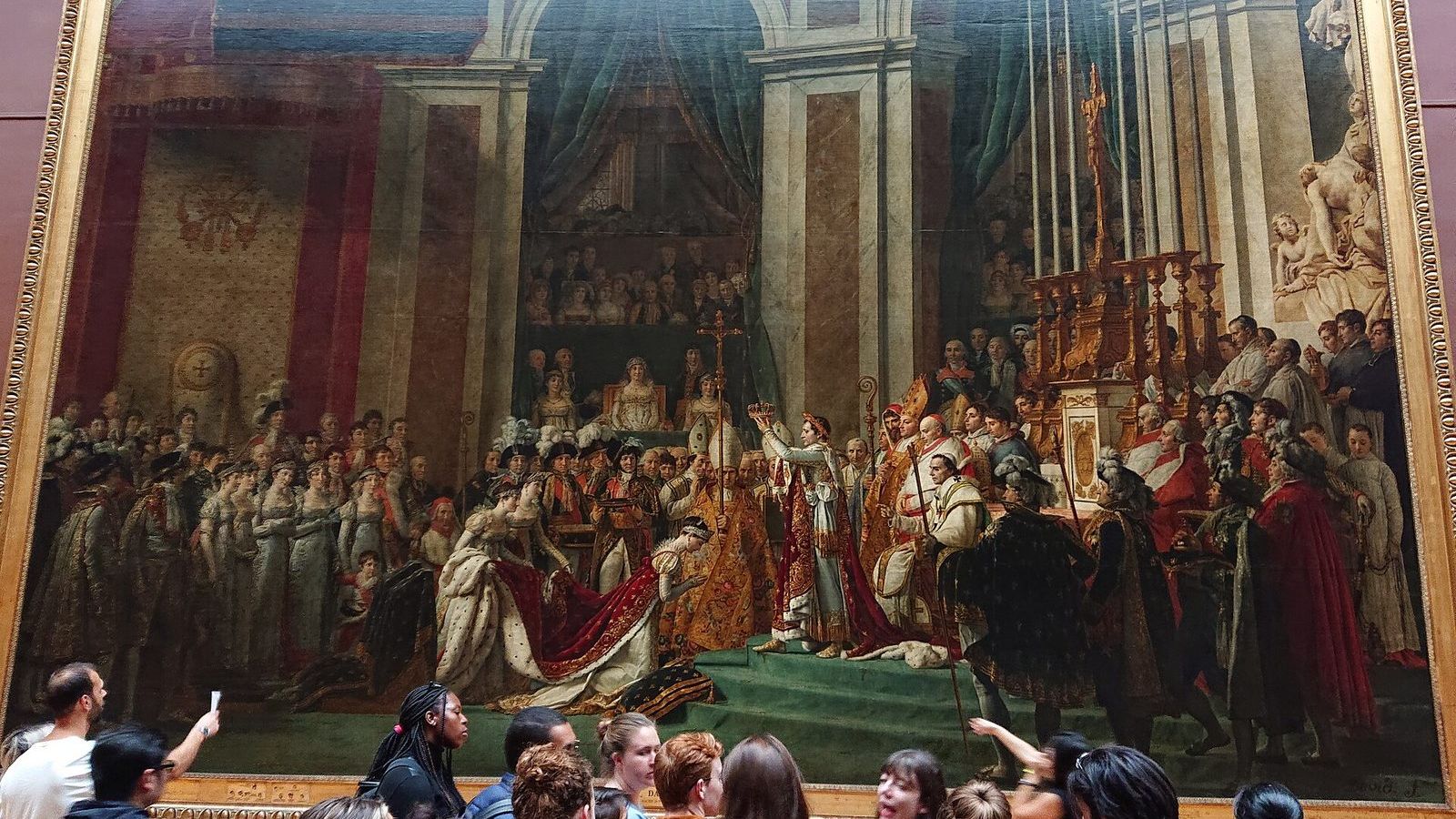
A museum owns what its law says it owns, and the law has changed before. The Louvre opened in 1793 with the collections of the king and the Church, which the Revolution had taken, and filled its galleries in the following years with what Napoleon's armies took from Italy and the Netherlands; much of it went back in 1815 under pressure from the victors. The Ghent Altarpiece, which has its own article, has been returned twice. The question of 1897 is being answered in the same way, slowly, by treaty and agreement, with the research of projects like Digital Benin providing the facts that every agreement depends on.
Unit 11 of the Art History Masterclass, Patrons, Collectors, and Museums, presents the Sarr and Savoy report as its research spotlight, reads its count with its definitions, and follows the Benin bronzes from 1897 to the returns of the 2020s. The curriculum describes it.