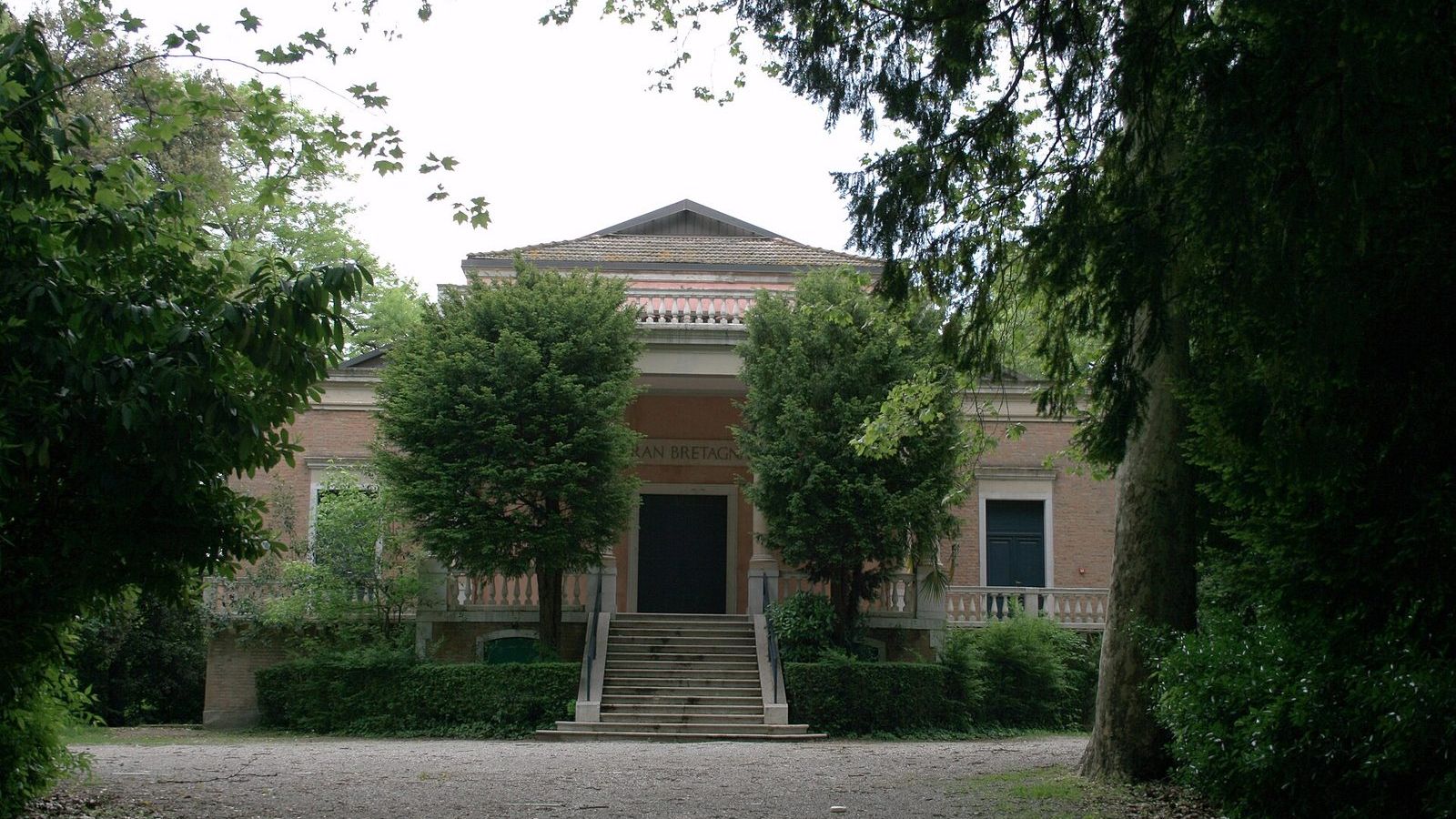
 Image: Gunnar Ries (CC BY-SA 2.5)
Where is a Sol LeWitt wall drawing?
In October 1968 the Paula Cooper Gallery, which had just opened in SoHo in New York, held an exhibition to raise money for the Student Mobilization Committee to End the War in Vietnam. One of the works in it was two grids of lines drawn in hard 6H pencil straight onto the gallery's wall with a ruler, so light that they almost vanished into the plaster. The artist drew them himself, and when the exhibition closed the wall was painted. Sol LeWitt had made his first wall drawing. By his death in 2007 he had written more than 1,200 of them, and written is the right word, because after the first few what LeWitt made was a set of instructions that other people carried out.
What a museum receives
A collector or a museum that buys a wall drawing receives an instruction, a short text such as "lines in four directions, each in one of four equal parts of a wall", with the medium named, graphite, coloured pencil, ink wash, or paint; a diagram, where the instruction needs one; and a certificate signed by the artist, which gives the drawing its number, names its owner, and is the proof that one execution of the plan on one wall is the work and that any other is a copy. There is no drawing in the parcel. When the owner wants to show the work, drafters, the people who draw it from the plan, carry it out on a wall, the label names them, and when the exhibition ends the wall is painted over and the drawing exists again only as three documents in a folder.
Several things follow that an older museum would find strange. The same drawing can be on two walls at once only if the owner lends the right, so an execution without the certificate is worthless whatever it looks like. The size follows the wall, so the work has no dimensions until it is drawn. An execution can be corrected by drawing it again, so there is no original for a conservator to protect. And since the drafters are named, a work by LeWitt is openly the work of other hands.
Why he let other people draw
From 1969 others drew the drawings from his plans, at first because he could not keep up with the invitations and then on principle. He said plainly that each person draws a line differently and understands words differently, and that the hand and the reading of the drafter were part of the result. The position had been set out the year before the first wall drawing. In June 1967 the magazine Artforum published his "Paragraphs on Conceptual Art", which said that in conceptual art the idea or concept is the most important aspect of the work, that all of the planning and decisions are made beforehand, that the execution is a perfunctory affair, and that the idea becomes a machine that makes the art. A perfunctory affair is one carried out as a routine, without further thought. In 1969 he reduced the position to thirty-five numbered sentences, printed in the magazine 0 to 9 in January and in the first issue of Art-Language in England that May. The wall drawings are what the machine produces when it is switched on in a particular room.
The same year as the first wall drawing, LeWitt contributed a series of lines in four directions to the Xerox Book, the publication of December 1968 in which seven artists were each given 25 pages and the book itself was the exhibition. It is free to read from Primary Information, and his pages are the wall drawings on paper, a system set out once and left to run.
105 drawings in a mill
The largest place to see the drawings is a former textile mill in North Adams, Massachusetts. In November 2008 a retrospective of 105 wall drawings opened on three floors of a building at the Massachusetts Museum of Contemporary Art, in a collaboration with the Yale University Art Gallery and the Williams College Museum of Art, and it is to stay there for twenty-five years. About sixty-five drafters, among them people who had worked with LeWitt for decades and art students from the region, took six months to draw it, and the labels name them. The drawings run from the faint pencil grids of 1968 to the bright acrylic bands and the dense graphite scribbles of his last years, so a visitor can walk through the whole run of the system from 1968 to 2007 in an afternoon. Nothing on those walls was drawn by LeWitt, and nothing on them is a copy.
A block that moved cities
The same arrangement, a plan and a count of parts, carried LeWitt's work out of doors. The photograph above shows Black Form (Dedicated to the Missing Jews), a block of mortared aerated concrete painted black, in front of Altona Town Hall in Hamburg. It was first built on the Schlossplatz in Münster for Skulptur Projekte 1987, 175 by 520 by 175 cm by the exhibition's record, was dismantled in February 1988, and was rebuilt in Hamburg in 1989 at the artist's gift, where the city has kept it since. The title, LeWitt said, was its only political element. A work that can be taken down in one city and built again in another from its plan follows the logic of the wall drawing in concrete.
Where the work is, then
Anna Lovatt, an art historian at Southern Methodist University in Dallas, asked that question in a paper in Tate Papers in 2010, and her answer is the one Unit 13 of the masterclass presents. She examined the drawings of 1968 to 1970, the plans from which they were made, the Xerox Book pages, and LeWitt's statement that each person draws a line differently, and she argued that the wall drawings treat drawing as something transmitted. A plan passes from the artist to a drafter, who reorders it through their own understanding, and what appears on the wall is a record of that passage, including the cracks and marks of the wall itself. On this reading the work is the passage from paper to wall, and every execution is the record of one such passage. Drawing, in LeWitt's hands, stays drawing, with its oldest relation, the mark on a ground, left permanently unsettled between a system and its execution.
The reading has a practical use. The next time a label in a museum says Sol LeWitt and names three or four drafters under it, you know what you are looking at: an execution, dated, of a plan that is kept elsewhere, made by the people named, and owned as a right. The same test works for a sentence by Lawrence Weiner, for a fluorescent tube by Dan Flavin, whose tubes the owner replaces when they burn out, and for much of the installation art of the decades since, which museums buy as a plan and a certificate and build for each showing. Ask where the work is, who made it, what the owner holds, and whether it needs you to be there.
Unit 13 of the Art History Masterclass, Minimalism and Conceptual Art, reads the instruction, the diagram, and the certificate as the forms the decade left behind, counts LeWitt's 122 incomplete open cubes, and presents Anna Lovatt's paper as its research spotlight. The curriculum describes it.